Detroit is no stranger to invention. The Motor City has been an innovative hub for the automotive industry for decades. The midwestern metropolis is shifting gears and accelerating into a new digital era.
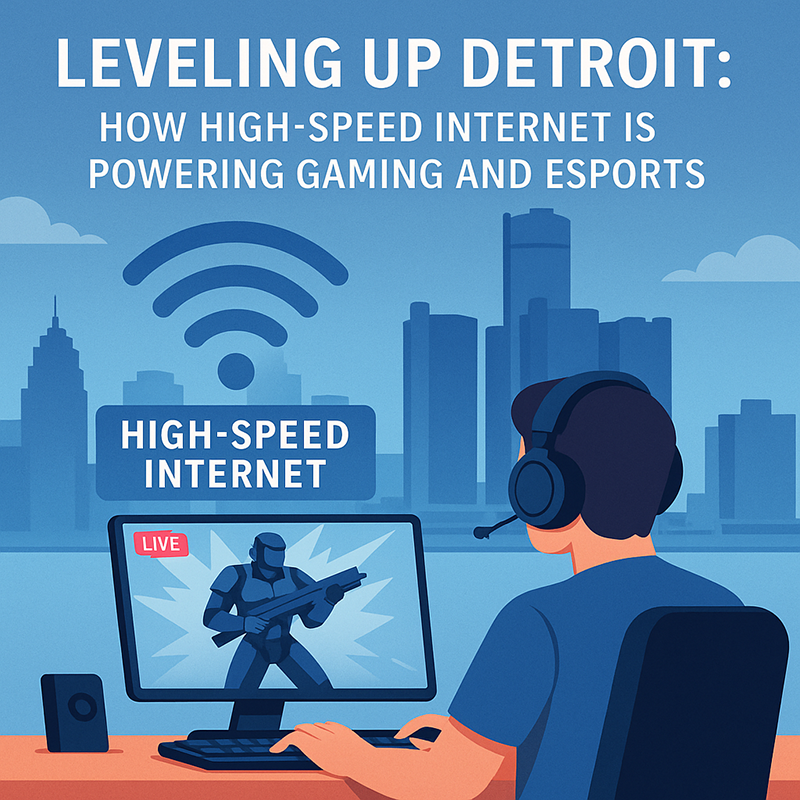
In this day and age of virtual reality, high-speed internet, and smart technologies often combine for exciting new avenues. Gaming and eSports are two types of online sports that utilize the power of quick, low-latency internet.
But what is smart technology, and how does the internet improve this technology? Let’s explore how lightning-fast internet is transforming Detroit into a hotspot for digital entertainment and why that matters more than ever in the growing realm of smart cities and competitive gaming.
What Is a Smart City, Anyway?
Before we dive into Detroit’s digital game plan, let’s quickly break down what a “smart city” is.
A smart city is a relatively recent term that refers to a city that utilizes technology, such as sensors, data analytics, and high-speed internet, to enhance the lives of its residents. These technologies can include traffic lights that adjust based on traffic flow, apps that help you find a parking spot, or smart meters that track energy usage in real-time. These aren’t just gadgets of the future, but tangible and helpful components in improving modern cities. A smart city not only assists locals with their daily lives, but can boost local economies and increase sustainability.
Why High-Speed Internet Is a Game-Changer
High-speed internet is a critical component of cities like Detroit implementing smart technology. Fast internet isn’t just about streaming your favorite shows without buffering or downloading massive files in seconds; it’s the center of the modern digital world, especially for gamers and eSports enthusiasts.
If you’re a gamer in Detroit, here’s why high-speed internet might be crucial for you:
- Low latency: In eSports, every second, or even millisecond, counts. A lag, a slow or delayed connection, can ruin gameplay, especially in competitive environments. High-speed internet, especially from fiber optic cables, can keep players consistently and appropriately connected.
- Live streaming: Whether you’re watching a tournament or broadcasting your own gameplay on Twitch, a fast connection ensures a smoother experience. This means no more frustrations with choppy videos or disconnections.
- Cloud gaming: Services like Xbox Cloud Gaming enable you to play high-end games without the need for a fancy PC or console. If your internet is fast enough, you’ll be able to access cloud gaming without interruptions.
Detroit’s Digital Transformation
If you live in Detroit, you may have noticed that over the past few years, the city has invested in expanding its fiber-optic infrastructure and implementing digital equity programs. This has helped to make high-speed internet more accessible and available to its residents. Public-private partnerships, like the city’s Connect 313 initiative, have been working to close the digital divide. Formed in 2020, Connect 313 has worked to support and uplift digital inclusion efforts, enabling more residents to access high–speed internet and virtual resources.
This expansion isn’t just helping with education and remote work, but it’s also breathing new life into the local gaming and eSports scene.
Gaming and eSports on the Rise in Detroit
Detroit’s gaming culture has been growing steadily, and with improved connectivity, it’s gaining significant momentum. Local gaming lounges, eSports tournaments, and game development meetups are popping up across the city.
Take GameTime, for example. This state-of-the-art gaming arena in downtown Detroit operates as an eGaming arena, sports bar, and restaurant. GameTime offers high-performance PCs, fast internet, and a venue for emphatic gamers ready to compete. If you’re a college gamer, you can also try out for Lawrence Technological University’s eSports team. The university’s teams compete at the collegiate level and attract top-tier talent thanks to their cutting-edge gaming infrastructure.
High-speed internet has also opened the door for local streamers and content creators to reach global audiences, putting Detroit on the map in the worldwide gaming community.
Jobs, Opportunities, and More
Gaming is fun, but it can also mean major business. Globally, eSports is a multi-billion-dollar industry with career paths in game design, shoutcasting (also known as eSports commentary), event production, coaching, and marketing.
With a stronger digital infrastructure, Detroit is well-positioned to capitalize on this momentum. High-speed internet can help support:
- Game development studios: Small developers and indie studios can collaborate and work remotely without tech headaches.
- Online education: Aspiring game designers can access online courses and tutorials to build their skills.
- Entrepreneurship: Streamers and eSports influencers can build personal brands, grow audiences, and generate income right from home.
Building Community Through Gaming
Online gaming isn’t just about competition, but it’s also about connection. In Detroit, gaming has become a means of uniting communities virtually and in real life.
Neighborhood events, youth programs, and local tournaments provide kids with safe and positive environments to socialize, learn teamwork, and develop tech-savvy skills. Certain local organizations are utilizing games to engage young people and teach coding, game design, and digital literacy. With high-speed internet in more homes and public spaces, these opportunities are becoming more equitable and more available for young people.
The Road Ahead
As Detroit continues to evolve into a smarter, more connected city, high-speed internet will remain at the core of its progress. The combination of smart city tech and gaming innovation creates exciting possibilities for Detroit residents. Although high-speed internet is essential for modern entertainment, it’s also contributing to education equity, economic growth, and community development.
The future of Detroit may not be in the automotive industry anymore, but in exciting expressions of gaming, technology, and high-speed internet that are bridging the community’s digital divide.