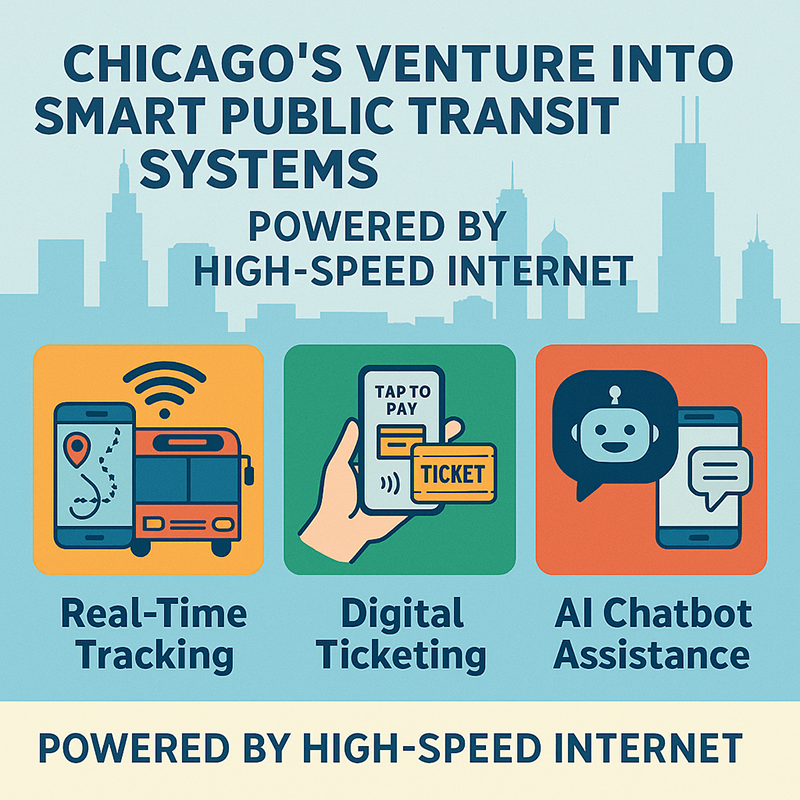
These days, we use the internet for just about everything; from connecting our laptops to automating our homes, high-speed internet is undeniably crucial. Another way major cities are implementing connectivity and integrating smart technology is with public transit. Chicago is one of those American hubs that’s at the forefront of this forward-thinking change.
Instead of Chicago’s public transit system adding more buses and trains, it’s experimenting with smart technology to address traffic issues and monitor bus times. Backed by high‑speed internet and a wave of new and improved digital tools, CTA (Chicago Transit Authority) is rolling out features that can help make daily riding smoother, safer, and more efficient.
Real-Time Tracking
Chicago has been investing in real‑time tracking for buses and trains for years. The upgraded CTA Bus Tracker, launched in 2022, now features a mobile-friendly design and improved arrival prediction data, making bus arrival information more accessible than ever. Meanwhile, dedicated train-tracking tools utilize CTA’s official live data feed, which updates rapidly and promptly. Apps like ChiTrack can also offer “zero‑tap access,” where you can save your home stop so you can see accurate, minute‑level arrivals.
Behind the scenes, CTA collaborates with partners like Clever Devices for GPS tracking and GTFS feeds for Google Transit. The data is fed into many websites and third-party apps, helping riders predict bus and train arrivals in real-time through their preferred channels.
In addition to these tracking tactics, CTA’s Innovation Studio is experimenting with digital bus-stop signs. Innovation Studio is Chicago’s transit initiative to test out new tactics for improved rider satisfaction. Chosen vendors, such as GDS and Papercast, are testing digital displays at 20 stops, displaying live arrival times, reroute alerts, and accessibility features like text-to-speech buttons. With the power of high-speed internet, all of these initiatives are becoming tangible realities for Chicago residents.
Digital Ticketing: Ventra Gets Smarter
If you’re a longtime Chicago resident, you’re probably familiar with the city’s Ventra system. Launched in 2013 as a significant upgrade from the common fare card, Ventra can help support contactless smartcards, mobile wallet payments like Apple Pay, and even personal bank cards. With new tap‑to‑pay technology at turnstiles, CTA riders are able to access transit quickly and easily.
The Ventra mobile app helps riders reload their accounts, purchase single-ride or multi-use passes, and receive low-balance warnings without needing to visit an in-person kiosk. It also integrates ticketing across CTA, Pace suburban buses, and Metra commuter rails, all managed digitally by the power of connectivity.
So, how has Ventra changed the landscape of CTA? This new digital ecosystem has helped to reduce frustrations before boarding as well as speed up transit access. The implementation of internet-linked devices for contactless payment has enabled riders to travel to and from their destinations with exceptional efficiency.
Smarter Support, Chatbots, and Multi‑Lingual AI Assistants
Beyond physical transit, the CTA has also adopted digital communication tools, all of which rely on high-speed internet. In late 2023, CTA teamed with Google Public Sector to launch Chat with CTA, a multilingual AI chatbot that can help answer rider questions, deliver real-time updates, and route incident reports in five languages: English, Spanish, Polish, Simplified Chinese, and Tagalog.
With the chatbot enhancing customer support efficiency through high-speed internet, CTA expects to double its support capacity in two years. With this new tool taking over specific communication responsibilities, staff can focus on strategic needs and more pressing matters while routine questions get handled by AI.
How High‑Speed Internet Makes It All Happen
As mentioned multiple times above, high-speed internet is the glue that’s holding CTA’s recent technology advancements together. Here are some of the devices and tools used to improve CTA trackers and data through fast internet:
- IoT routers and video analytics: These devices on buses have started collecting instantaneous passenger-count data, enabling predictive measures such as crowding alerts.
- Cellular or solar‑powered digital displays: Efficient and modern timing displays for bus and train stops rely on low-latency internet to stream timely arrival data.
- AI-powered safety cameras: Recent cameras installed in the city utilize automated feeds to detect and track road obstructions.
- Rider apps and the Ventra system tap: Phone applications and contactless payment methods use high-speed internet to process payments efficiently.
What High-Speed Internet Means for Riders
It’s simple; Chicago’s smart transit upgrades have helped make commuting simpler. Here are just a few ways that CTA riders can see improvements from high-speed internet:
- Reliable CTA Times: You can check real‑time arrival times right from your phone or digital bus‑stop screen.
- Contactless Pay: You can pay with just a tap, eliminating the need for paper tickets or handling cash.
- Chat with CTA: You can report issues or get help using CTA’s smart chatbot, which means instant assistance without talking to an employee.
Behind it all, transferring more data through a reliable internet connection can help CTA fine-tune schedules, monitor crowding, and increase efficiency. Upgraded internet means better transit experiences for Chicago residents all around.
Chicago and High-Speed Internet
Chicago’s transit transformation showcases how high-speed internet in Chicago has enhanced public transit, making it smarter and easier for riders. Through real-time vehicle tracking, digital fare payments, AI chatbots, and fast-operating digital signage, the CTA is developing a modern, data-driven system that prioritizes convenience and efficiency.
From the upgraded Bus Tracker and ChiTrack apps to Ventra’s contactless system, Innovation Studio pilots, and AI safety systems, riders are enjoying more reliable information about their upcoming bus or train. With high-speed internet changing the face of CTA, passengers are experiencing fewer boarding headaches and quicker access to bus and train terminals.
If residents are reaching their destinations faster due to smart technologies, then CTA’s relationship with high-speed internet will undoubtedly continue to grow.